Beautiful New Work by Polly Wales

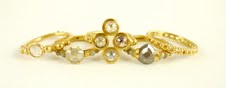
Polly Wales already has an impressive resume and a stunning collection of work but there are still more inventive pieces on the way.  Courtesy of the sales staff at Polly Wales, here’s a sneak peek at Polly’s diamond collection to be launched in January 2012.
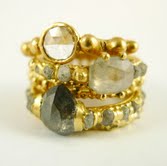
Truly unbelievable.  Unique, stylish, and heirloom quality.

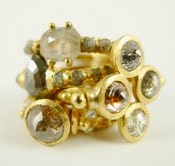
Polly uses a casting method, where stones are cast directly into the metal.  She allows the method to really speak in her pieces.  That is a skill in itself — to know when to not try and exert control.  Casting this way creates a unique effect that does more than just set the stone in the piece.  The setting becomes more of a design element and it marries with the stone and changes it.  This, for example:

This piece, from her Crystal Collection, is currently available on Polly’s website and it shows how this casting method, when unleashed, allows the stones and the metal to somehow become more blended — more one.  Every piece is the frozen moment in time when the metal and the stones met.  It is not a method for use by a timid jewelry designer.  It’s bold and a huge design risk that, for Polly Wales, pays off over and over again.

On her website, Polly describes her work this way, “a disregard for the traditional, juxtaposed with a love of the ancient and classical jewellery.”  I think that comes through clearly in her designs.  The words that come to mind for me are “modern artifacts.”  It’s the past reflected in a new way.

Lust for Life

Aside from the aesthetic value of jewelry, which I love, I am attracted to the idea of carrying around a little piece of life with me.  Typically, that “life” is metaphorical.  It can be a piece of history — personal or human history in general.  It might be the connection one feels to the maker of the piece.  In the case of Wearable Planter, Colleen Jordan‘s Etsy store, the concept of a portable piece of life takes on a whole new meaning.

As the song says, that’s worth a million in prizes.

Colleen manages to make a novel concept very attractive.  I think it is a testament to her well-considered designs that little pieces of greenery can stand in for stones and really not miss a beat.  These pieces might not be for every day or for every occasion but they are unmistakable as jewelry that is actually meant to be worn and are not just art pieces.  I love the natural variable that is built into the pieces by virtue of the addition of plants.  No two plants will ever be the same and they will be beautifully flawed.

A Lovely Holiday Party at Shibumi Gallery

Last night we attended the holiday party at Shibumi Gallery, which is April Higashi‘s place.  As I’ve mentioned, this is my second experience here.  On both occasions, I’ve noticed that events here are very well attended and they should be.  The jewelry offerings from several different designers, including April herself, are artistic, bold, and stylish.  April, with her jewelry and in what she gravitates toward in other artists, seems to appreciate bold, unique design that doesn’t get in the way of its wearability.

April was there last night and gracious as always.  Thank you, April, for another lovely visit to your beautiful gallery.

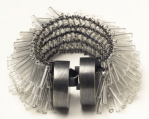
As part of the holiday party, the featured artist was Karen Gilbert.  Her work is meticulously assembled with metal components and glass.  Often, the metal in her pieces involves incredibly tiny fabrication.  The glass, sometimes vessels and sometimes other shapes, seems to take the place of where stones would typically go.  But, the glass works better for the overall aesthetic.  I see a botanical influence, I see the artifacts of science, and I see modern sculpture.

The images of Karen Gilbert’s work were found on her website and one from the highly informative, The Jewelry Loupe, website.

At the show, I was able to observe Karen Gilbert’s pieces on people who were trying them on.  These clever sculptures turn into very flattering jewelry with movement, that catch the light, and remain bold yet understated.  It was nice to see a range of scale in her line.  There was everything from incredibly dainty to larger eye-catchers.

A Piece of the Night Sky

Gemstones are wondrous and varied.  Isn’t it funny that the earth produces these amazing things then we take them, assign them value and, quite frequently, carry them around with us.

Far and away, my favorite stone is lapis lazuli.  I especially love really dark lapis with a lot of pyrite because it resembles the night sky.  Gorgeous lapis has appeared in jewelry across the aesthetic spectrum for much of human history.  Today, jewelry designers, of all stripes, are still inspired by the dark stone, constantly finding new and inventive uses for it.  I don’t know much about the lapidary arts, but it is my understanding that it is a soft stone and, perhaps, that’s why it can be carved with such detail.

Carved Lapis - Chinese Qing Dynasty

Here, are some fine and varied example of what this versatile stone can do in jewelry.

Antique Lapis Brooch - for sale by Adin

This brooch is available on Adin.  Just look at that color.  It sings against the platinum and diamonds.  It just looks like the ancient treasure it is.

Lapis Lazuli Crinkle Earrings - by Mark Kaplan

These lapis stones are paired with stellar metal work by Mark Kaplan and are available through Etsy.  This is actually my favorite cut of lapis — round and flush in its setting.  I have a small pendant made with a piece of lapis just like these and it is among my favorite jewelry possessions.  I found it a bin of small bits and pieces in Chinatown here in San Francisco and paid $5 — but that’s a story for another time.

Unexpected Wild Flower - by Jean-D

Finally, this incredible piece by Jean-D can be found in Etsy store MonBedo.  It has a piece of fine lapis, which, as the description of this item explains, is lapis without any pyrite.  The ring shows how lapis can also capture an organic shape.  The setting is so striking and bold and does the beautiful piece of stone justice.  As an aside, I also happen to really like that Jean-D posted some detailed comments about the design of this piece.  It’s nice to hear from a designer about how a piece came to be.

Brass and Silver Cloudburst Earrings

Cloudburst Earrings - by Noelle Powell

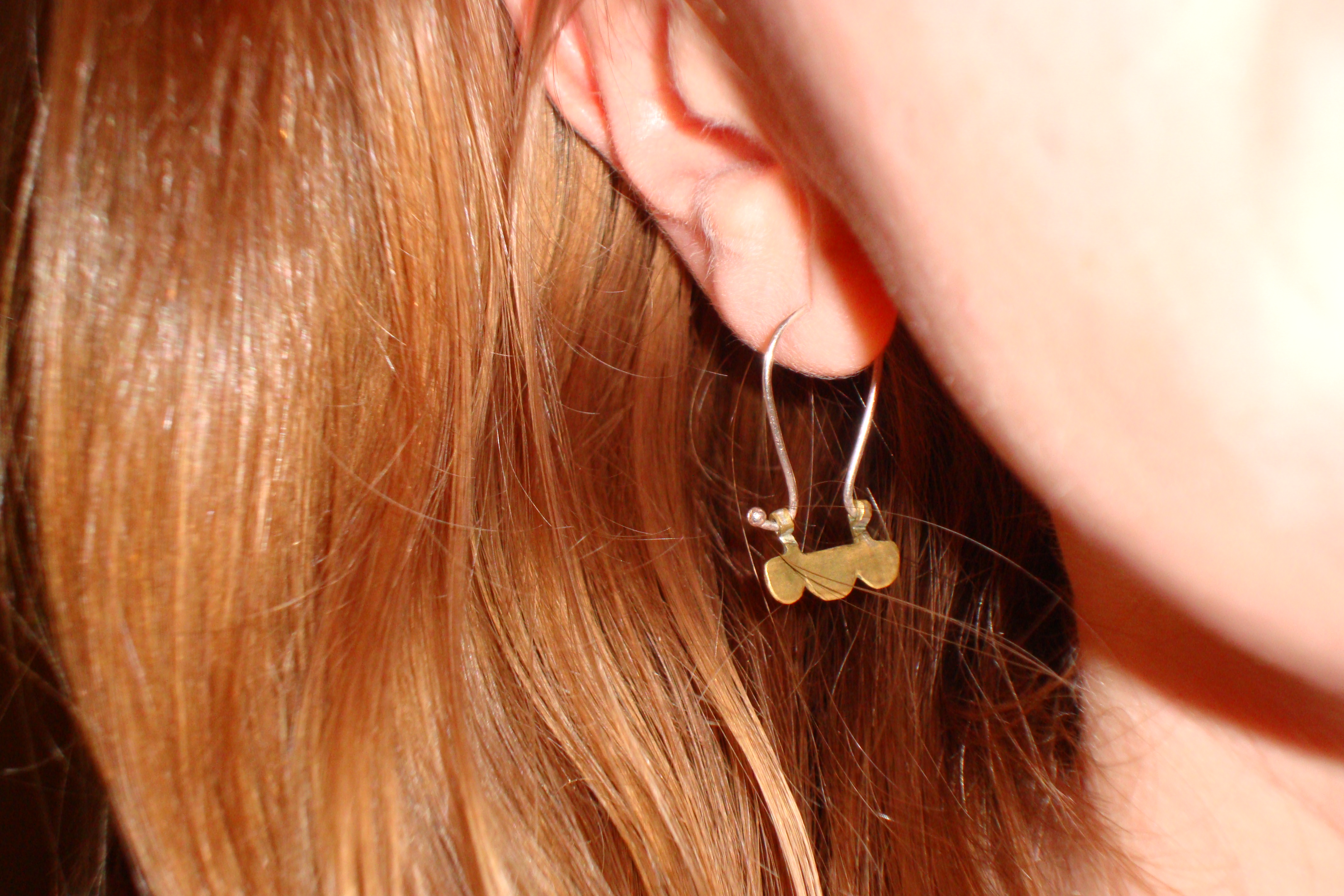
These little guys are very familiar items to anyone who knows me.  I made them myself and, ever since their creation a couple months ago, I have worn them frequently.  To an experienced metalsmith they are very simple pieces to fabricate.  For me, not so much.  I sketched out a design that was small and would require some tiny torch work specifically to have a reason to experiment with that skill.

The bottom of each earring, the “cloud,” was simply cut out of brass.  As I have worn these, the brass has turned several different shades.  I haven’t polished them and I just let them go until they finally landed at the patina you see today. When I cut out the brass, I left little tabs which were then looped over and the ends soldered down. Thus, the tubes were made that the earring wire goes through.

The earring wires are silver, of course, and they gave me the chance to practice using the torch to ball the silver.  On these, a good eye would notice that the silver is a bit pitted, which, as I understand from my teacher, means that I let the torch stay on the metal just a nanosecond longer than I should have.  Practice, practice.

What was I thinking when I designed them?  I was trying to achieve that casual functionality that I appreciate in jewelry.  The functional component (the earring wire) as design element.  I wanted to create something that worked with negative space and that had some movement.  In the end, I really like them but I think it could be done better.  I intend to make another version in the future with, perhaps, a focal point that has a more fluid shape.

Negative Space to a New Level

The use of negative space should be a consideration in jewelry design.  When earrings hang from ears — suspended in space — how are they interacting with that space around them?  How does the shape of a pendant appear against the backdrop of skin.  Filigree, of course, a style that has appeared throughout the ages, is all about making shapes out of negative space.

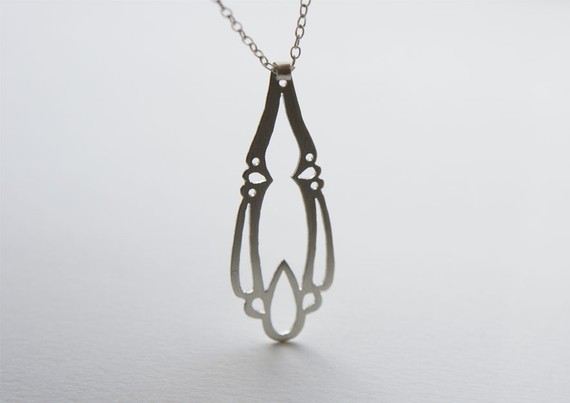
Lorena Martinez-Neustadt brings negative space to a new level with her line of jewelry (available on Etsy in the shop Gemagenta).

The first two pieces below, designed to be two-dimensional renderings of three-dimensional things, like faceted stones, are so clever.  Lorena made the wise choice to leave some of the piece undisturbed.  Perhaps, to suggest a glare off of the stone or even just to let our imagination do some of the work.  Either way, it strikes me as well-considered design element.  In a way, by leaving some of it “blank,” she is using negative space in two ways.  (Does that equal a positive?)  Those little omissions are also what set Lorena’s “gem” pieces apart from some other similar concepts that have shown up in the mass produced market in the last few years.

Faceted Brilliant Pendant - by Lorena Martinez-Neustadt

Faceted Emerald Pendant - by Lorena Martinez-Neustadt

Beyond these gem pieces, Lorena’s collection has a consistent use of negative space that feels fresh.  I especially love these:

Lingerie Elongated Pendant - by Lorena Martinez-Neustadt

Lingerie Ring - by Lorena Martinez-Neustadt

The designs are lacy, yet clean.  Inspired by lace and lingerie without overdoing the concept.  The pieces are flattering against the skin and appear to be very wearable.

I’m No Expert

I’m no expert but, as they say, I know what I like.

Look, I don’t really have any bona fides when it comes to art or fashion or jewelry.  I dropped out of my art major one semester in to pursue other academic interests.  I’ve never been very good in art classes and I don’t play well with other artists generally.  Although I am a fairly compliant person and I have no issues with authority, if you put me in an art class, I turn into an eye-rolling, huffy, obstructionist pain-in-the-ass.  I don’t know why.  It’s not that I think I’m that good — I just don’t want to do it their way.  Ever.  So, long ago, I found that making my strange art by myself was the best way to go — or at least the best way to not get asked to leave a classroom.  That leaves me, however, with absolutely no authority to comment on anything aesthetic, really.

But, here, I do make such comments anyway because I think I have something to say when it comes to jewelry.  Why?  Sheer exposure.  I have spent so much time looking at jewelry that I think it can safely be called research.  When I see something that is new and different to me, I know that it is new and different, period. In the world of jewelry, I think I know special when I see it.

I have said all that to say this:  There are some people whose work I respect so much that I don’t really feel worthy to comment or even compliment.  But, if I am to continue with this little blog of mine, I must, in order to be true to the mission, which is to highlight excellent jewelry design.

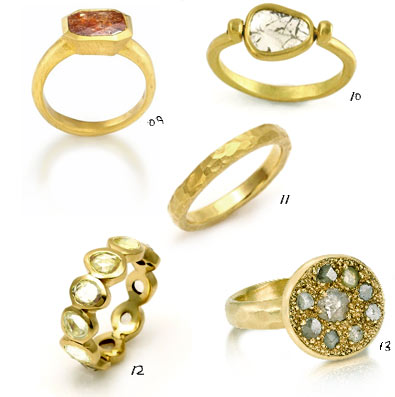
So, here it goes. I give you the absolutely genius of April Higashi:

April Higashi Yellow Gold Rings

April Higashi Stone Rings

April Higashi Patterned Enamel

There’s not much that I can say.  It’s breathtaking.  All of it.  There is such a clear vision that she brings to her line.  I feel that her designs say that she knows what jewelry should be — it can’t just be a pretty item that sits by itself, it has to be a pretty item on you.  It is design with such subtlety and restraint.  I want to live in a world designed by April Higashi.

On a personal note, my husband and I visited April’s Shibumi Gallery in Berkeley, CA for an opening one Sunday afternoon several months ago.  Either she or someone on her staff brings an infallible eye to curating the gallery.  Everything that is displayed is both complementary and reflects a consistent sense of style.  We were greeted so warmly by the gallery manager, Fiona, and April casually chatted with us (as if not aware of her greatness!).  April’s husband, the incredibly talented sculptor Eric Powell, was there as well.  Given my obvious interest and perhaps because I had commented that I had just begun jewelry-making classes, we were offered a peek at April’s studio.  It was wonderful.

A Brooch of a Different Color

As I have I mentioned, I think that good jewelry design creates a beautiful item that is worn on the body and that it is not necessarily about it’s interaction with clothing.  Because of that, brooches and pins tend to fall off of my radar — those are things that your clothes wear.  Sometimes, though, a piece is just so well done that it must be mentioned.

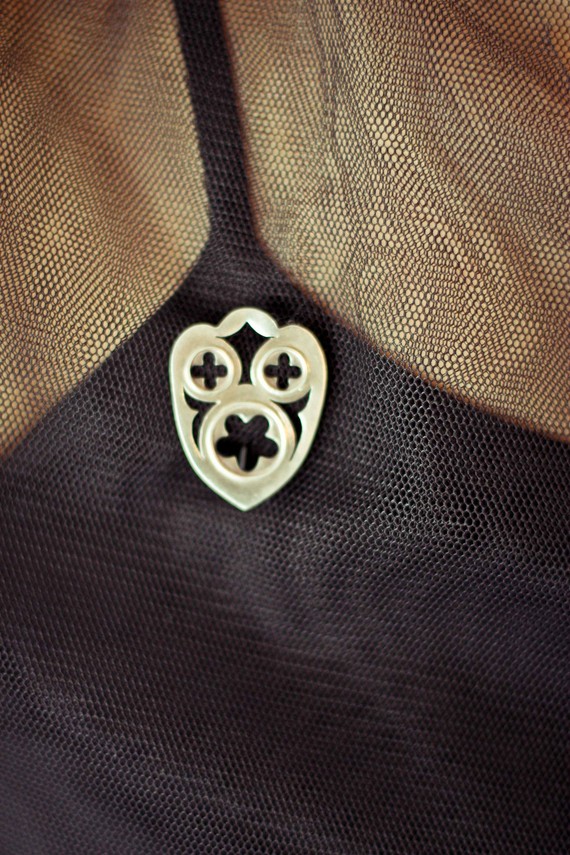
This is the Quatre Cinq Silver Brooch by Dorothy Cheng, which is currently posted on Etsy.

Quatre Cinq Silver Brooch - by Dorothy Cheng

Worn by a sweater or worn by a person — Who cares?  It is drop-dead gorgeous.  It strikes the perfect balance of clean design, inspired architectural touches, well-considered scale, and attention to detail that makes a perfect piece.  I can see it with a dress, with a jacket, anything.

Thank you, Dorothy Cheng, for turning my head with a brooch.

The Effect of Bracelets

There is something more personal about jewelry that is worn on the hands.  Perhaps that is because the wearer can see it do what jewelry is designed to do — to be in and interact with the world.  You can see how your bracelets move and how your rings break the light.  I am sure that seeing your jewelry behave as mobile art changes how you feel about those pieces.

While rings are by far my favorite type of jewelry, bracelets have a special place in my heart as the first type of jewelry I tried to make as a child — friendship bracelets and bracelets made out of coiled wire, to be specific.

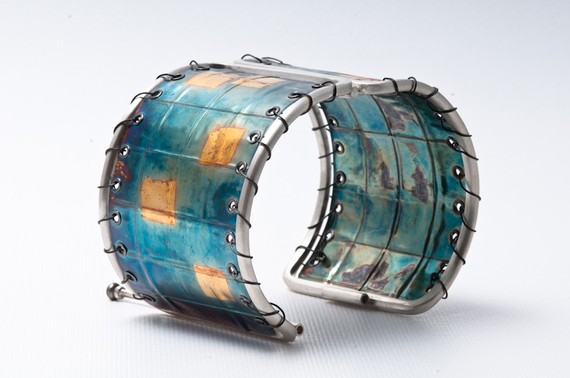
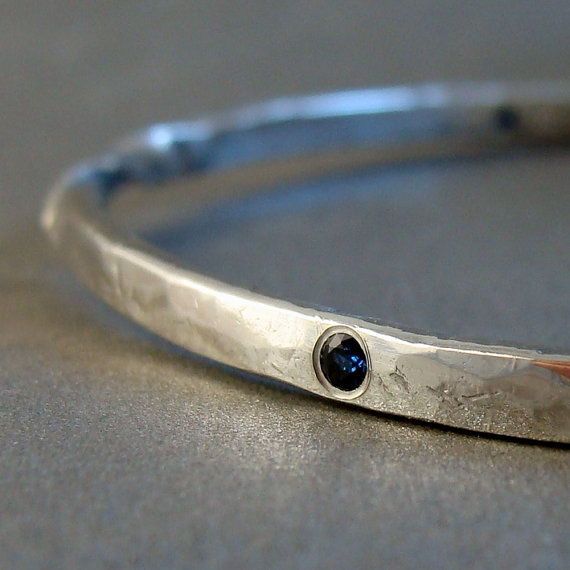
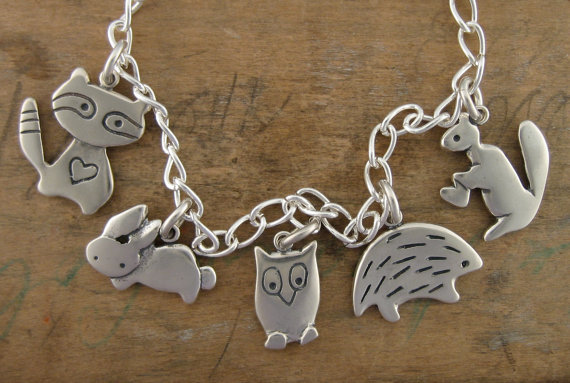
Bracelets are very expressive and different bracelet styles contribute different things.  Cuff bracelets add a visual break and can foreshorten the arm — much liked cropped pants do for the leg.  Bangles can be musical and dramatic as they orbit around a wrist adding movement.  Then, there are chains with focal points and charms. They swing and sway and add length to arms and hands.  In addition, each type can change a great deal depending on materials.  A leather cuff, for example, is very different in overall effect from a beaded cuff.

Blue Keum-Boo Cuff -- by Judy Parady

Twisted Sterling Silver Bangle Bracelet with a Gypsy Set Blue Sapphire - by Two Trick Pony

Woodland Love Charm Bracelet - by Mark Poulin

These fine examples of fun bracelets can be found here: Blue Keum-Boo Cuff — by Judy Parady; Twisted Sterling Silver Bangle Bracelet with a Gypsy Set Blue Sapphire – by Two Trick Pony; and Woodland Love Charm Bracelet – by Mark Poulin.

Buy For Love

Some years ago, I began to avoid cosmetics with paraben ingredients.  I had read about how paraben, which is used as preservative, was an endocrine disruptor and how traces of it can be found in sea life from run-off.  It just sounded like bad news to me.  (I will bring this back to jewelry, I promise.)  So, after years of struggling to avoid it, imagine my relief when the paraben issue caught fire and I could purchase familiar brands in the drugstore with labels that now boasted they were “paraben-free.”  But, I found that, if you looked closer, you would often find that other harmful chemicals were put in the place of paraben – those chemicals had just not earned their buzz-word status yet and, therefore, they could escape a consumer’s attention.

I think that the tale of paraben is a cautionary one.  When we only have the time or the inclination to educate ourselves about a portion of a problem, we create a marketing trend rather than a solution.

As conscientious consumers, jewelry, poses a number of problems.  There is the question of the toll that it can take on the earth — the mining of metal and gems; the chemicals used in production.  There is the highly publicized problem of gems as the currency of war.  One might also wonder about the labor practices of the mining industries or in the mass production of jewelry.  What are we supporting with what we wear on our bodies; become emotionally attached to; give as gifts; and pass on to our children?  No one really likes to think about it but, often, we make a statement of tacit approval with the money in our wallets.

As I think I’ve made clear so far, I find jewelry to be an endlessly fascinating art form.  It is sculpture and rhythm and color and balance.  Jewelry is a storyteller.  Each well-loved piece takes on a life of it’s own and, as it’s temporary custodian (because it will likely outlive you), you get to share it’s story and add to it.  Not having it in one’s life is not an option. So, what to do about buying it with one’s conscience intact?

There are many “green” jewelry and ethical jewelry options out there these days.  Right here in San Francisco, we have Brilliant Earth, a jewelry store founded by Beth Gerstein and Eric Grossberg to address some of the very problems with jewelry I have cited while still creating valuable pieces of fine jewelry.  Brilliant Earth has a trusted reputation and has a done a great deal to educate consumers about how to make conscious choices in jewelry purchasing.

On the other hand, I think the idea of green and ethical  jewelry is slowly catching on and, perhaps, there in lies the danger — “the paraben effect.”  People begin to look for a buzz word that has holds no real standard and then inadvertently perpetuate the problem or create a new one.

While I have no solution to well-meaning consumers being taken in by less well-meaning marketing tactics, I can offer a few suggestions: Know the person attached to the two-hands that make your jewelry.  Buy vintage and antique.  When appropriate, recycle your metal and gems and have custom pieces made.  In a way, all those suggestions are the same.  While you might not be able to know everything about the potential pitfalls of jewelry buying, build relationships with jewelers and dealers you trust and avoid uneducated impulse buys.  Buy for love and sleep soundly at night.